
As seasons shift, your home’s plumbing system goes through a seasonal transition of its own. Freezing temperatures, heavy water use, and months of wear can leave hidden issues behind. Early spring is the perfect time to assess your plumbing, address small problems before they grow, and schedule professional support where needed. A little preparation now can help you avoid costly repairs and enjoy a stress-free season.
Below is a practical spring plumbing checklist to help homeowners navigate late-winter and early-spring maintenance.
Check for Frozen Pipe Damage
Even if your pipes didn’t fully freeze during winter, repeated temperature swings can cause cracks, weakened joints, or small leaks. Inspect exposed pipes in basements, crawl spaces, garages, and utility rooms for bulges, corrosion, or dripping water. Also, look for water stains on ceilings or walls, which may signal a slow leak behind the scenes.
In San Antonio, it’s common for pipes to be uninsulated and exposed to the elements, which makes them susceptible to freezing. Make sure you check them when the weather warms up!
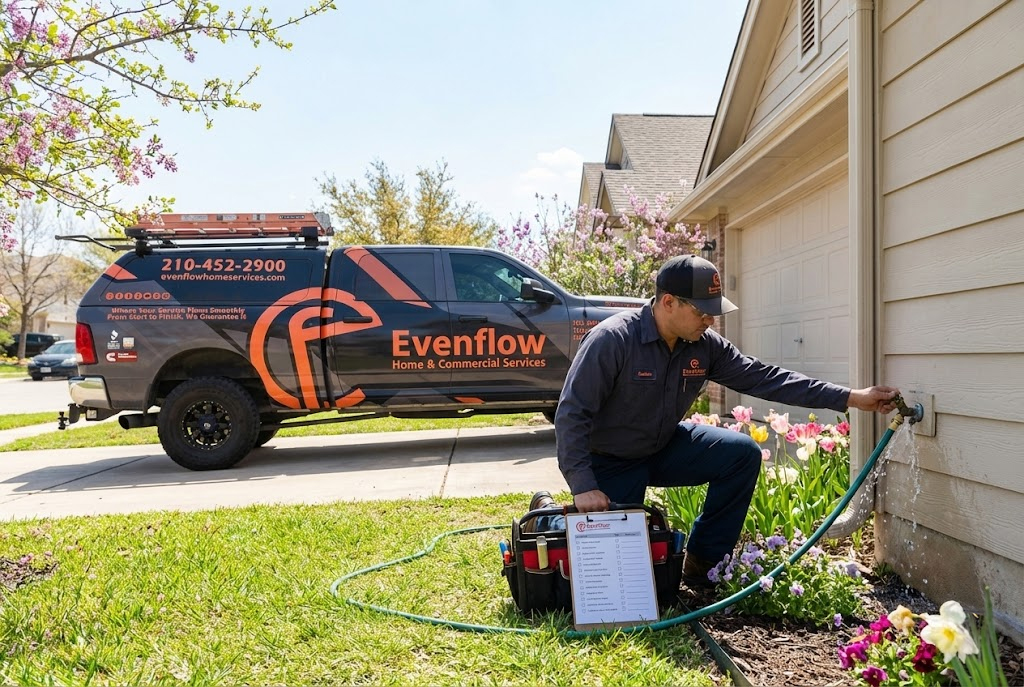
Test Outdoor Faucets and Hose Bibs
Outdoor fixtures are especially vulnerable to winter damage. Turn on exterior faucets and check for drips around the handle or leaks along the pipe inside your home. Low water pressure may indicate a cracked pipe hidden within the wall.
Addressing these issues early is important before you begin regular outdoor water use for gardening, washing cars, or filling pools. A professional repair now can prevent costly water damage later in the season.
Evaluate Your Water Heater
After working harder throughout the winter, your water heater may need attention. Listen for rumbling or popping sounds, which can indicate sediment buildup in the tank. Check around the base for moisture, rust, or corrosion.
Annual flushing helps extend the life of your water heater and improve its efficiency. Many homeowners prefer to have this maintenance performed by a professional to ensure it’s done safely and thoroughly.
Address Slow Drains and Prevent Clogs
Winter often means increased indoor activity, which can lead to buildup in sinks, tubs, and showers. Hair, grease, soap residue, and debris accumulate gradually and can cause slow drains.
Avoid harsh chemical drain cleaners, which can damage pipes over time. Instead, use drain strainers and properly dispose of grease. If you experience recurring clogs, backups, or gurgling, a professional drain cleaning can clear the line and prevent larger plumbing issues.
Prepare Your Irrigation System
Before turning on your sprinkler system for the season, inspect visible components for cracks or damage. Ensure the valves operate correctly and that the sprinkler heads are aligned. You might want to wait until the final thaw of the season to turn on any sprinklers!
Stay Ahead With Preventative Maintenance
Regular maintenance is the key to avoiding unexpected plumbing emergencies. By addressing minor issues early and partnering with a trusted plumbing professional for inspections and repairs, you protect your home from costly disruptions.
With a thoughtful spring plumbing checklist in place, you can confidently move into the warmer months, knowing your plumbing system is ready for the season ahead.
Schedule a plumbing inspection or repair with Evenflow Home & Commercial Services. Where your service flows smoothly from start to finish: we guarantee it!