
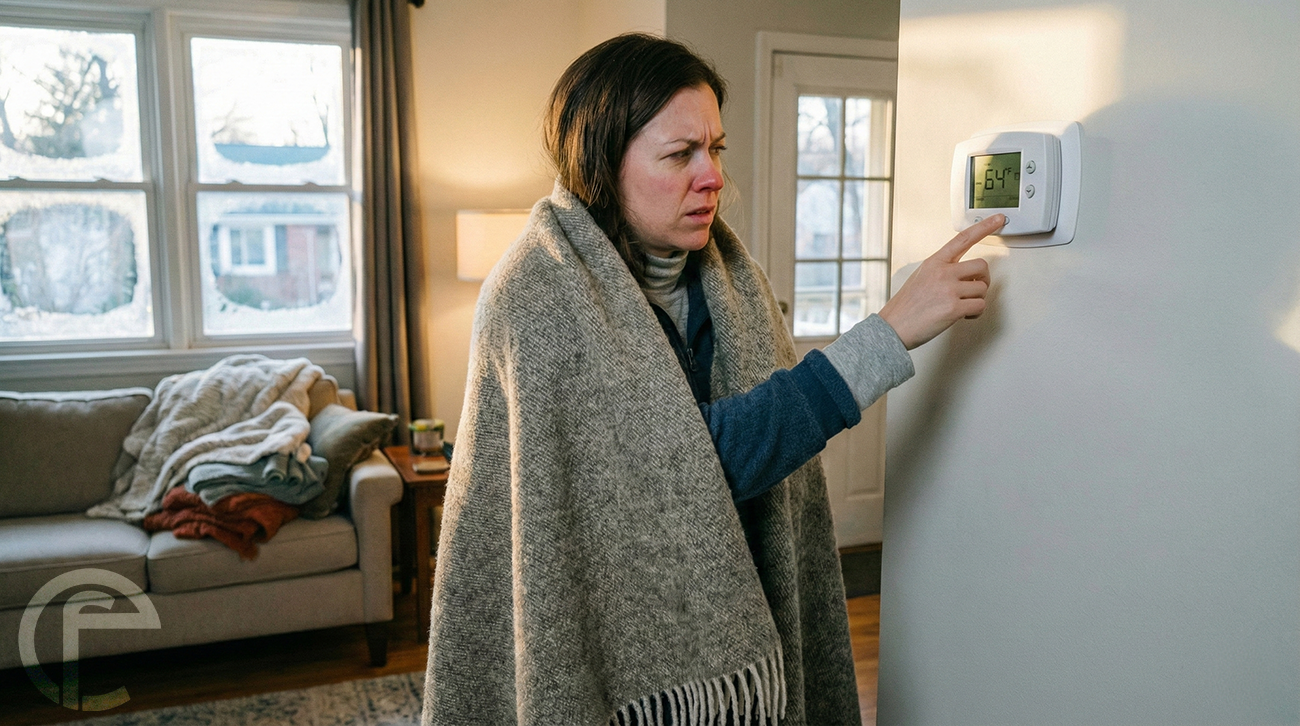
Few things are more stressful than waking up on a freezing winter morning to discover your heating system has stopped working. Whether you rely on a furnace, mini split, or centralized heat pump, sudden heat loss is an emergency, both for your comfort and your home’s safety. Before panic sets in, here are a few practical troubleshooting steps you can try, along with clear signs it’s time to call in a professional.
Start Simple
Start with the simplest checks. First, make sure your thermostat is set correctly. It sounds obvious, but thermostats can get switched to “Cool” or “Off” by accident, or a schedule change may have kicked in at the wrong time. Set the system to “Heat,” bump the temperature a few degrees higher than the current room temperature, and wait to see if anything starts up. If your thermostat uses batteries, replace them. Even low batteries can cause erratic signals.
Power Problems
Next, check your power sources. For furnaces and air handlers, ensure the emergency shut-off switch (usually a light-switch-style toggle near the unit) is in the On position. Look at your electrical panel to see whether a breaker has tripped. For boilers, verify that the power switch and gas supply valve are on. If you use oil heat, confirm the fuel tank isn’t empty. Heat pumps should also be checked for tripped breakers or outdoor unit blockages such as snow or ice buildup.
A Filter Clog Issue
If everything seems to be powered and the thermostat is working, the next quick check is your air filter. A clogged filter restricts airflow so drastically that a furnace may overheat and shut down as a safety precaution. If the filter looks dirty, replace it and try restarting the system.
DIY Troubleshooting Can Only Go So Far
While these basic steps can resolve some issues, many “no heat” situations stem from deeper problems such as ignition failures, faulty sensors, malfunctioning blower motors, or refrigerant issues in heat pumps. Modern heating systems are full of safety controls designed to prevent dangerous conditions. When one of these components fails, the system often locks itself out to protect your home. Resetting the equipment without understanding the cause can lead to repeated shutdowns or even create a hazardous situation.
That’s why professional diagnosis is essential when simple checks don’t solve the problem. A trained technician can safely test electrical components, evaluate fuel and ignition systems, inspect heat exchangers, check refrigerant pressures, and pinpoint the exact failure. Attempting DIY repairs during a heating emergency can easily worsen the issue, void warranties, or create safety risks—especially with gas or high-voltage equipment.
The Cold Is No Joke
Another reason to call for help quickly is your home’s vulnerability to extreme cold. Long periods without heat can lead to frozen pipes, moisture problems, and significant repair costs. If your system isn’t producing heat after basic troubleshooting, or if you notice unusual smells, repeated cycling, loud noises, or visible damage, it’s time to reach out.
Losing heat in the winter is never convenient, but you don’t have to face it alone. If your system still won’t run—or if you’d rather skip the guesswork—give us a call. We’ll diagnose the issue safely, make the necessary repairs, and get your home warm again as quickly as possible.
Frequently Asked Questions
Question: What type of heating system is best for a home in Springfield, VA?
Answer: The best heating system depends on your home’s size, existing utilities, insulation, ductwork, comfort preferences, and energy-efficiency goals. Furnaces, boilers, and heat pumps each offer different advantages, so a professional assessment can help determine the most suitable option.
Question: How do I know when my heating system is too old to keep repairing?
Answer: Age alone does not determine when replacement is necessary, but frequent repairs and declining efficiency can make an older system increasingly expensive to maintain. Homeowners should compare repair costs with the equipment’s age, condition, performance, and expected remaining lifespan.
Question: Can a heat pump keep a Springfield home warm during winter?
Answer: Modern heat pumps, especially cold-climate models, can provide effective heating during low outdoor temperatures when properly sized and installed. The home’s heating load and equipment specifications determine whether supplemental heat is recommended during the coldest conditions.
Question: Should I replace my furnace and air conditioner at the same time?
Answer: Replacing both systems together can make sense when they are similar in age or need matched components for efficient operation. If one system is newer and compatible with the replacement equipment, keeping it may still be a practical option.
Question: How long does heating system installation usually take?
Answer: A straightforward furnace or heat pump replacement can often be completed within one day when major modifications are unnecessary. Installation may take longer if ductwork, electrical service, gas piping, venting, or other components need upgrades.
Schedule emergency repairs with Evenflow Home & Commercial Services when you need them. Where your service flows smoothly from start to finish: we guarantee it.